
Christmas holly: Facts, history & care
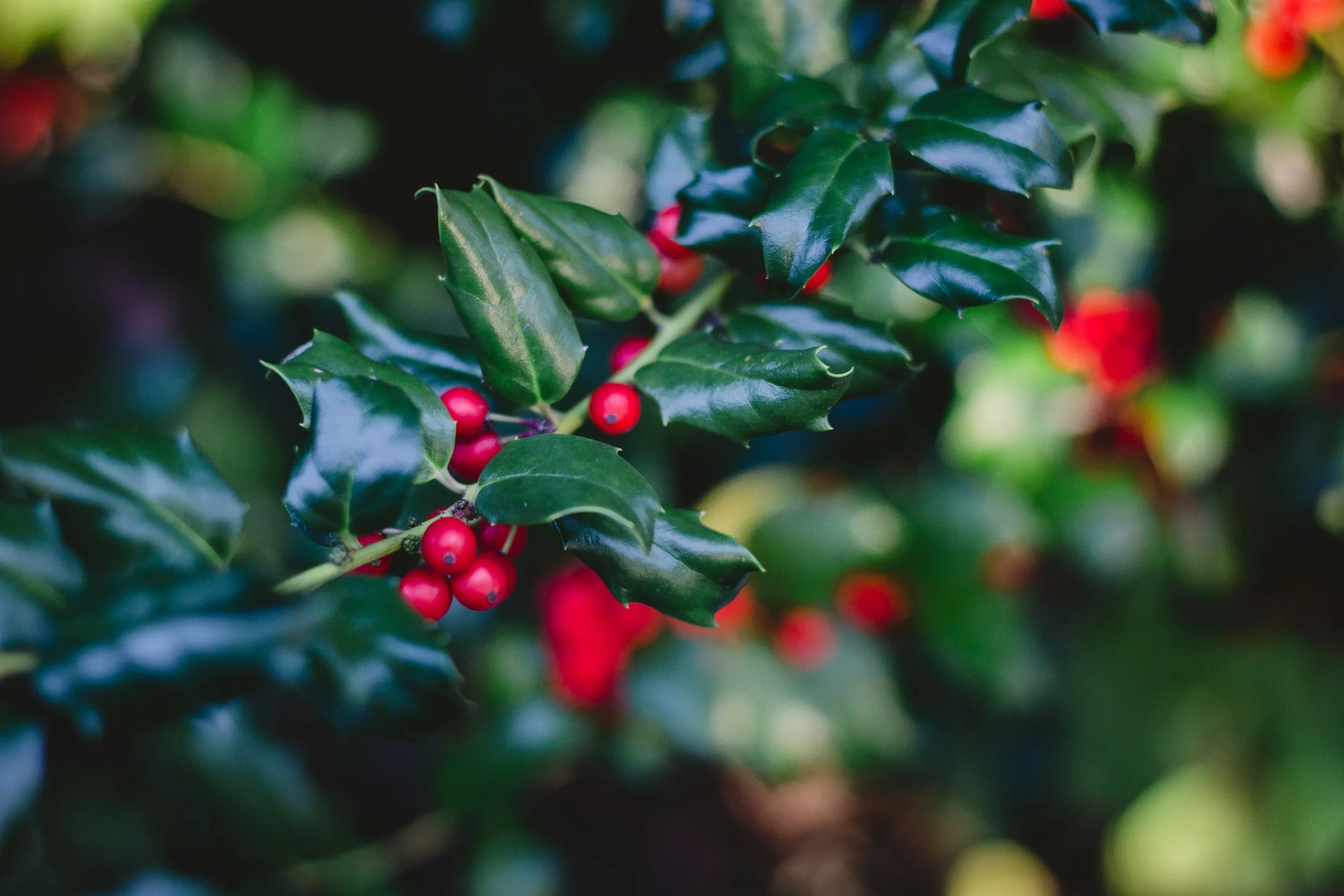
Christmas holly has been a beloved symbol of winter and the holiday season for centuries. With its glossy green leaves and bright red berries, Christmas holly brings natural color and beauty to wreaths, arrangements, and seasonal decorations. Here are some interesting facts about Christmas holly, along with tips for keeping cut Christmas holly fresh and beautiful.
Learn more
Click the plus sign next to each topic to expand more about the story, history, and care of Christmas holly.
-
The use of Christmas holly as a winter decoration dates back centuries. Celtic peoples of Northern Europe decorated their homes with Christmas holly during the winter solstice, or Yule, celebrating its evergreen foliage during the darkest time of the year.
The ancient Romans also valued Christmas holly. They believed it could protect against lightning and witchcraft and exchanged boughs of Christmas holly with friends during Saturnalia, a festival celebrated around the winter solstice.
Early Christians continued many Celtic and Roman winter traditions and incorporated Christmas holly into celebrations of the birth of Christ. Christian tradition associated the prickly leaves with the crown of thorns and the red berries with the blood of Christ.
-
English Christmas holly (Ilex aquifolium) has a long history in the Pacific Northwest. Records indicate that English holly was first planted in Portland, Oregon, in 1874 and in Puyallup, Washington, in 1891. Commercial sales from these early plantings began around 1898.
Today, the primary types of Christmas holly grown commercially by Northwest growers are green English Christmas holly and variegated English Christmas holly. Variegated Christmas holly is not a separate species; it is a variety of English holly. Green Christmas holly has rich, glossy green foliage, while variegated varieties have cream-colored leaf margins surrounding green centers.
There are approximately 175 species of holly worldwide. They vary widely in leaf shape, plant size, and growth habit. Only a small number are grown commercially in the United States and Canada.
-
Christmas holly plants are either male or female. Both produce small white flowers, but only female plants produce berries. A female plant also needs a compatible male plant nearby for pollination and berry production.
If a Christmas holly tree has no berries, it may be a male plant, there may not be a compatible male nearby for pollination, or the plant may be experiencing a health issue related to nutrients, pests, or disease.
-
In South America, related holly species are used to make maté, a popular tea-like beverage, particularly in Argentina.
Christmas holly wood is also valued for its fine, uniform appearance and has traditionally been used in specialty woodworking, including the manufacture of piano components such as black keys.
Holly extracts have been used in folk remedies for centuries. Research has also explored compounds found in holly, including their potential medical applications.
-
Christmas holly has been used as a festive decoration for centuries and remains remarkably versatile. It can be displayed in wreaths, bowls, baskets, vases, centerpieces, garlands, and arrangements with other seasonal greenery.
Its bright foliage and berries complement flowers and seasonal decorations throughout the year. Christmas holly can be paired with red flowers, spring bulbs, pumpkins, grapes, and other natural materials. The possibilities are virtually endless.
-
Proper handling and storage can help cut Christmas holly remain fresh and attractive throughout the holiday season.
Post-Harvest Treatment
Christmas holly from members of the Northwest Holly Growers Association may be treated after harvest with a fungicide or with a combination of fungicide and plant hormone commonly referred to as a “holly dip.” These treatments are intended to help Christmas holly retain its leaves and berries for a longer period of time.
Properly treated Christmas holly can remain fresh for approximately two weeks. Green Christmas holly generally retains its freshness longer than variegated Christmas holly.
The hormone component contains 1-naphthaleneacetic acid and potassium salts, while the fungicide is typically copper sulfate. These products are used in very small concentrations, measured in only a few parts per million.
When Your Christmas Holly Arrives
For individual orders, request delivery as close as possible to the date you plan to use the Christmas holly. Most growers ship individual orders within two days of harvest, and some ship on the same day the Christmas holly is cut.
When your Christmas holly arrives, open the package immediately and allow the foliage to “air.” Lightly moisten it if necessary.
Keep cut Christmas holly and wreaths in a cool, dark location above freezing until you are ready to use them. Christmas holly sprays can be placed in water much like cut flowers. Cutting or gently crushing the bottom of the stems can help improve water absorption.
Caring for Wreaths & Arrangements
Christmas holly wreaths and other decorative pieces are typically displayed outdoors. Whenever possible, protect them from freezing temperatures.
In warm or dry climates, lightly misting the leaves can help extend the freshness of Christmas holly. Christmas holly centerpieces and table arrangements will last longer when placed in a shallow plate or pan containing water.
Enjoying Dried Christmas Holly
Christmas holly remains attractive even after it has dried. Wreaths can be brought indoors, while Christmas holly sprays can be used in garlands, on fireplace mantels, and in other holiday decorations.
As Christmas holly dries, its leaves develop a soft green patina while retaining their characteristic shape. The berries deepen in color as they dry and gradually shrivel. Properly cared-for dried Christmas holly wreaths can remain attractive for several years.
-
Commercial buyers commonly purchase Christmas holly in five- and ten-pound boxes, sometimes requesting delivery as much as a month before it will be used.
For these orders, Christmas holly should be refrigerated promptly after harvest and kept refrigerated during shipping and storage. It should not be stored or exposed to temperatures above 39°F. Fresh, cold, moist air circulation should be maintained whenever possible.
Christmas holly should not be stored or shipped with fruit, particularly apples or pears. Shipping containers should be clean and free of other plant materials.
-
Christmas holly berries are an important winter food source for many birds and animals.
For people, the berries are bitter and eating enough of them may cause an upset stomach or mild digestive discomfort. Christmas holly is also a useful indoor decorative material for people with allergies because it contains no dust, pollen, or fragrance.
-
Take care when handling cut Christmas holly and Christmas holly wreaths. The spines on Christmas holly leaves can be very sharp, and wreaths may contain exposed wire ends.
Wearing gloves is recommended when handling cut Christmas holly and Christmas holly wreaths.
-
Green and variegated English Christmas holly (Ilex aquifolium) are the principal types grown by members of the Northwest Holly Growers Association for Christmas decorations.
English Christmas holly is an evergreen plant well suited to temperate climates. Variegated Christmas holly is propagated from cuttings rather than from berries, as its berries are sterile.